Continental roots
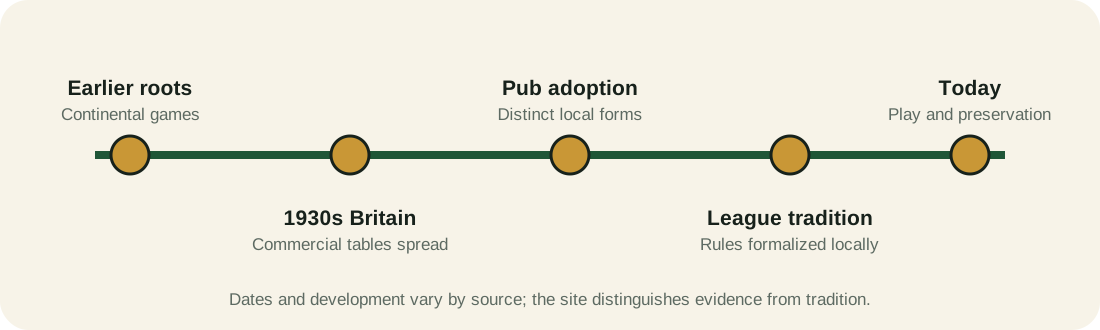
The game's ancestry is commonly linked to French and Belgian games such as billard russe and to the broader bagatelle family. These games used holes, obstacles and scoring targets rather than the six edge pockets familiar from pool.
Arrival in Britain
Historical accounts commonly credit David Gill with seeing a related game in Belgium and encouraging the Jelkes company to produce an English table in the early 1930s. The compact format suited pubs because play occurred from one end and the timer supported turnover.
Manufacturers and spread
Jelkes, Sams, Riley, Burroughs & Watts and Clare are among the names associated with tables. Different makers and local markets helped create differences in width, hole layout, cabinet form and mechanism.
The league tradition
Bar billiards became especially established in southern and eastern England, with additional traditions elsewhere and in the Channel Islands. Local leagues turned a pub amusement into structured competition while preserving rule variations.
The game today
The All England Bar Billiards Association supports national and local play. Enthusiasts, pub teams, restorers and heritage groups maintain tables and pass on knowledge that is not always captured in one central source.
Why preservation matters
A working table contains social history, mechanical design and local sporting tradition. Preserving the game means documenting rules and table types as well as keeping physical tables playable.
Further reading
- All England Bar Billiards Association
- Traditional Games: history and useful information
- Snooker Heritage: the story of the tables and game
Last reviewed: August 2, 2026. Rules can vary by league and table type; consult your local competition rules.