Typical hole values
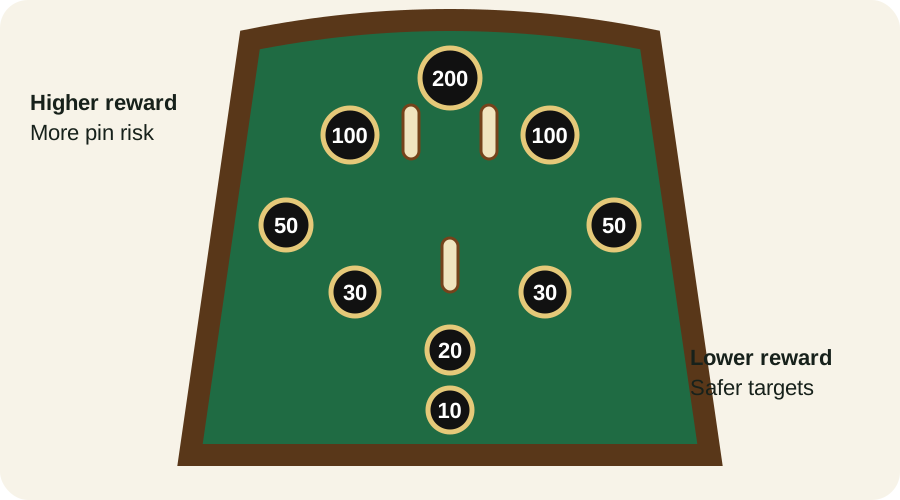
| Hole | Common count | Basic score |
|---|---|---|
| 10 | 1 | 10 |
| 20 | 2 | 20 each |
| 30 | 2 | 30 each |
| 50 | 2 | 50 each |
| 100 | 1 | 100 |
| 200 | 1 | 200 |
What is a break?
A break is the running total scored during one uninterrupted visit. Pot a white ball into a 50 hole and then another into 20, and the break is 70. If the next shot misses, that visit ends and—assuming no cancelling foul—the 70 is added or retained according to the scoring system in use.
How the red ball scores
The red ball commonly scores twice the printed hole value. A red into 50 therefore scores 100; a red into 200 scores 400. Because the high-value holes are close to pins, the doubled reward comes with meaningful risk.
How penalties affect the score
A light-pin foul commonly loses the current break. A black-pin foul may carry a more severe consequence. Exact deductions differ by league, so do not assume a casual house rule applies in competition.
Worked example
| Shot | Result | Running break |
|---|---|---|
| 1 | White into 30 | 30 |
| 2 | White into 50 | 80 |
| 3 | Red into 20 (doubled) | 120 |
| 4 | Miss | Break ends at 120 |
Scoring is also strategy
The best theoretical shot is not always the best match shot. A safe 20 that keeps the visit alive can be more valuable than a reckless attempt at 200. Players manage expected score, pin risk, remaining time and the opponent's total.
Last reviewed: August 2, 2026. Rules can vary by league and table type; consult your local competition rules.